
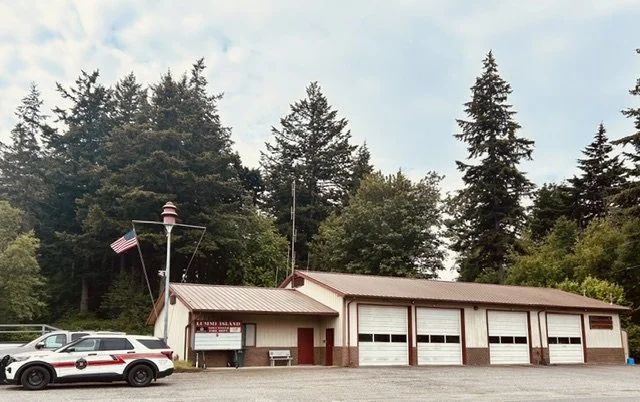
THE LUMMI ISLAND FIRE DEPARTMENT
Meet the People Behind the Pager:
A Conversation with Lummi Island Fire Chief
One of the things that makes island life so special is the people who quietly step up when their neighbors need them most.
Many of us hear the siren sound throughout the island and see our neighbor volunteers at the firehall, but few of us truly understand what emergency response looks like on an island—or the dedicated people behind it.
I recently had the opportunity to ask the Fire Chief of the Lummi Island Fire Department a few questions about emergency services, preparedness, and what residents should know about staying safe on the island. He was kind enough to take the time to share his insights, and I think you'll find his perspective both informative and reassuring.
-
We're Whatcom County Fire District 11, governed by an elected Board of Fire Commissioners and led operationally by our Fire Chief and officers. While we have a small administrative staff, the heart of our department is our volunteer firefighter/EMTs.
Most people don't realize how much happens behind the scenes. Our volunteers train every week, maintain certifications and skills, respond to medical calls, fires, rescues, and alarms, and spend a great deal of time focused on preparedness and prevention. Public education and community outreach are just as important to our mission as responding to emergencies.
-
By far, most of our calls are medical in nature.
We respond to falls, breathing difficulties, chest pain, lift assists, and a variety of other medical emergencies. Like many small communities, EMS calls make up the majority of our workload. We also respond to alarms, public assistance calls, hazardous conditions, rescues, and, of course, fires when they occur.
-
I think many people are surprised to learn that we don't have enough staffing to keep a fully staffed fire station operating around the clock. There is always an officer on duty, but our firefighters respond from home, work, or wherever they happen to be when a call comes in.
I also want residents to know that every voter-approved tax dollar dedicated to fire suppression and emergency medical services stays right here on Lummi Island. Those funds directly support the services protecting this community.
-
Falls are one of the biggest preventable emergencies we respond to, especially those caused by loose rugs, poor lighting, cluttered walkways, or unsafe stairs. We also see cooking fires, heating-related incidents, and carbon monoxide exposures that could often be prevented with a few simple precautions.
One of the best things residents can do is perform an honest safety assessment of their home. We work closely with Lummi Island Health & Wellness and their HOME FIT program, which helps identify potential hazards before they become emergencies.
And here's one piece of advice I always share: if you're not sure whether you should call 911, you probably should. Waiting too long during a stroke, heart attack, or other serious medical event can make a difficult situation much worse.
-
Island life is wonderful, but it presents challenges that mainland communities don't face.
Weather, ferry disruptions, road conditions, and geography can all affect response. Mutual-aid resources often take longer to arrive, and our volunteers are responding from their homes rather than from a staffed station.
That's why preparedness and self-sufficiency are so important here. We rely on strong emergency response, but we also rely on neighbors helping neighbors.
-
The most important thing to know is that when you call 911, help is on the way. But because our responders are volunteers, response times can vary depending on where people are when the call comes in and what's happening on the island that day.
Something as simple as having a clearly marked address, gate code information, and access instructions can make a tremendous difference when minutes matter.
-
Because we depend on a single ferry for emergency access, I encourage everyone to be prepared for temporary periods of self-sufficiency. Keep extra food, water, medications, and emergency supplies on hand.
It's also critical to create defensible space around your home. Clearing dry vegetation, leaves, and other flammable materials helps reduce wildfire risk and makes it easier for firefighters to protect your property if a fire occurs.
-
One of the simplest and most important things is making sure your address is clearly visible from the road, especially at night.
We also appreciate well-maintained driveways and trimmed tree branches. Fire apparatus are much larger than personal vehicles, and clear access helps us reach you quickly and safely.
-
If you're able, gather important medical information such as medication lists, POLST forms, or DNR directives. If possible, make sure there's adequate space for responders to move through the home and access the patient.
-
The biggest thing is to stay calm and give responders room to work.
We live in a close-knit community, and it's natural to want to help when a neighbor is experiencing a crisis. But patients deserve privacy, and emergency crews need space and focus to provide the best care possible.
-
Volunteering is one of the most meaningful ways to help.
We're always looking for people interested in becoming firefighter/EMTs, and no previous experience is required. We provide all the training.
For those looking for another way to serve, the CERT program is an excellent option and plays an important role in community preparedness.
And honestly, simple gestures mean a lot. A thank-you note, a kind word, or a card recognizing the work our volunteers do can have a bigger impact than people realize.
-
Many newcomers assume help will always arrive quickly and underestimate how long ferry disruptions or power outages can last.
I encourage everyone to prepare for at least two weeks of self-sufficiency, including supplies for pets and prescriptions. It's also important to understand local hazards and have a plan for earthquakes, severe weather, and other emergencies before they're needed.
-
Like many people in this profession, I wanted to be part of something greater than myself. I wanted to spend my time doing as much good as I could for as long as I could.
Once I started volunteering, I realized very quickly that this was the path I was meant to be on. Serving this community isn't just a job for me—it's an honor.
And every day, I'm grateful for the opportunity to do it.